
- Catalogs
- Beckman Coulter Life Sciences - Particle
- FLOOR-MODEL ULTRACENTRIFUGE OPTIMA X SERIES


FLOOR-MODEL ULTRACENTRIFUGE OPTIMA X SERIES

FLOOR-MODEL ULTRACENTRIFUGE OPTIMA X SERIES
The Optima X Series ultracentrifuges by Beckman are engineered for high-performance applications in life sciences and engineering, known for their reliability, safety, and user-friendliness, integrating decades of technological advancements.
Beckman has been a pioneer in centrifuge technology since 1947, introducing innovations like the first analytical ultracentrifuge and titanium rotor. The Optima X Series continues this tradition with advanced features and environmental considerations.
The series includes models such as XPN-100 and XE-100, with maximum speeds of 80,000 to 100,000 rpm and g forces up to 802,000 x g, supporting a wide range of research applications.
Features include ultra-thick steel lids, top-loading designs to prevent mishooking, and precise temperature control to avoid crystallization accidents. The centrifuges comply with international safety standards and have multiple overspeed prevention functions.
The eXpert software aids in density gradient centrifugation and supports GMP processes, featuring a user-friendly interface, multilingual support, and comprehensive data management capabilities, including real-time monitoring and remote access.
The Optima X Series uses a refrigerant-free cooling system and regenerative braking to reduce power consumption, designed for quiet operation and high precision, with a vacuum-encased drive unit for longevity.
The series offers various rotors, including fixed-angle, vertical, and swing rotors, each with specific speed and capacity specifications to meet diverse research needs.
The Optima X Series ultracentrifuges embody Beckman's expertise, offering advanced features for safety, performance, and environmental sustainability, suitable for a wide range of scientific applications.
The document provides detailed specifications and operational guidelines for various centrifuge rotors and tubes used in laboratory settings, including rotor types, tube capacities, and specific applications for different centrifugation processes.
Several rotor models are listed, such as NVT 100, NVT 90, and NVT 65, detailing their maximum speed, g force, and tube capacities. For instance, the NVT 100 has a maximum speed of 100,000 rpm and a capacity of 8 tubes of 13x51 mm.
It describes the operation of continuous flow rotors like the CF-32 Ti for large-volume sample separation and zonal rotors like the Ti-15 for density gradient centrifugation.
The document emphasizes using the correct rotor and tube combinations for optimal results and highlights specific tubes like OptiSeal and QuickSeal for different applications, including handling infectious samples.
Various accessories are mentioned, such as tube slicers, removal tools, and sealing kits, aiding in efficient sample handling and processing.
Unique design features include the twist-lock bucket mechanism and top-loading style to prevent mishooking and ensure safety during centrifugation.
Tables and charts provide a comparative analysis of rotor capacities, speeds, and g forces, helping users select appropriate equipment for their specific needs.
The document outlines specifications for centrifuge models, including the Standard Core B-29 Core with a maximum speed of 32,000 rpm and a maximum g force of 102,000 x g, with a nominal capacity of 1,675 mL.
The Premier Model Optima XPN Series and Basic Model Optima XE Series are detailed with product numbers for standard and biosafe systems, featuring a maximum speed of up to 100,000 rpm, maximum g force of 802,000 x g, and a dynamic rotor inertia check for overspeed prevention. The units feature a 15-inch full-color LCD touch screen and an electrical heating and cooling system, compatible with existing Beckman Coulter floor rotors, and have a 10-year drive unit warranty.
The software for the Optima XPN and XE Series includes a rotor and tube catalog, help function, RPM and RCF indicators, and self-diagnostics history export. The XPN series offers additional features such as remote control, user ID settings, and export run history.
Beckman Coulter provides various support programs, including the FRIP Program for rotor inspection, a Rotor Seminar for safe handling, and a Quality Program offering IQ and OQ services. Maintenance services include comprehensive, protective, simple, and basic plans, along with an extended warranty.
The equipment conforms to international safety standards IEC 61010-2-020, EMC Directive EN 61326, CSA, and CE mark requirements, and is manufactured in an ISO 13485-certified factory.
Catalog excerpts

FLOOR-MODEL ULTRACENTRIFUGE
Open the catalog to page 1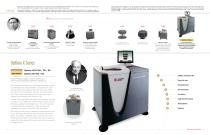
Beckman centrifuges have a history of over 70 years since first developing the Model E, the world’s first analytical ultracentrifuge in 1947. We are grateful for the support of our valued customers over these many years. Developed originally in 1949, as an analytical ultracentrifuge to separate samples, the high-performance Model L is typically used as a preparative centrifuge. Until around 1950, Beckman centrifuges were known affectionately as “Spincos” and constantly delivered leading edge technology, such as powerful acceleration and precision temperature control functionality as the top brand...
Open the catalog to page 2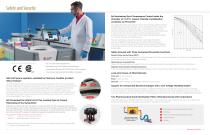
Safety and Security By Maintaining Strict Temperature Control Inside the Chamber at ± 0.5°C, Cesium Chloride Crystallization Accidents are Prevented As a precaution when using cesium chloride as the density gradient medium, crystallization during centrifugation must be prevented. For this reason, the maximum speed must be derived using a curve plotted with the cesium chloride and maximum speed of the rotor. This curve varies with temperature. In other words, the maximum speed at which crystallization due to temperature does not occur varies. For this reason, the temperature inside the chamber...
Open the catalog to page 3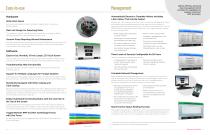
Automatically Records a Complete History Including a Run History That Can Be Output Wide Work Space Optima XPN has enhanced data management which provides the capabilities to support customers’ GMP processes. Run records, the number of times that a rotor is used, the self-diagnostic history and programs are recorded automatically per user and can be output to recording media (USB flash and drive, etc.) or printers connected to the LAN via USB or Ethernet. Management with a log book is no longer necessary, making the work more efficient. Securing a wider space for rotor installation enables safer,...
Open the catalog to page 4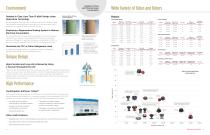
Quietest in Class with Minimal Power Consumption Quietest in Class (Less Than 51 dBA) Design Using Quiet-drive Technology Reduced Noise of Drive and Cooling Fins Fixed-Angle Rotors By developing a drive that reduces the resonances of the drive during centrifugation, noise pollution is reduced, and a running noise that is quietest in its class of 51 dBA or less is achieved. Vertical Rotors Maximum Maximum g Speed* (rpm) Force* (x g) Capacity Tube Size κ Factor (φ x length: mm) (tube count x mL) Previous Drive and Cooling Fins New Drive and Cooling Fins Changing the shape of the fin enabled the...
Open the catalog to page 5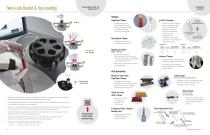
Twist-Lock Bucket & Top-Loading Complete Solution Swing Rotor SW 32 Ti/SW 32.1 Ti OptiSeal Tubes • Simply push in the plug (stopper) gently with your finger to seal completely. Special tools are not required. QuickSeal Tubes • A heat-sealing type of biocontainment tube. g-MAX System • With the g-MAX system, several capacity tubes can be centrifuged at maximum g force in one rotor, drastically shortening the separation time. Small-volume samples can also be centrifuged at maximum g force. Type 90 Ti • Sometimes chemical polymerization resin tubes are not appropriate for centrifugation using organic...
Open the catalog to page 6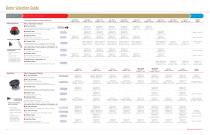
Rotor Selection Guide Select a rotor type based on use Select tubes to suit your purpose * The numbers represent the recommended order. Fixed-Angle Rotors Adapter Spacer Adapter Spacer Type 50.4 Ti Adapter / cap may be required Pellet / Supernatant Collection 1 Bottle Assembly Easy ultracentrifugation processing is possible with screw-style cap Use from approx. half of the quantity is possible 2 OptiSeal Tubes Can be sealed easily with a plug 3 Centrifugal force Select rotor based on g force and processing capacity QuickSeal Tubes Heat-sealing for a complete seal Optimal for infectious samples,...
Open the catalog to page 7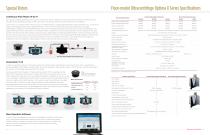
Special Rotors Floor-model Ultracentrifuge Optima X Series Specifications Continuous Flow Rotor CF-32 Ti Main Unit Specifications By injecting (loading) samples continuously into the rotor while it rotates at a high speed, the constituents contained in the sample can be collected as pellets on the rotor wall. It can also be used to remove impurities from a sample. The CF-32 Ti, a continuous flow rotor for use in an ultracentrifuge, is used to separate large-volume samples of 2 L or more in a single centrifugation and to collect pellets efficiently. The amount of sample that can be processed during...
Open the catalog to page 8
Reliable Support Program At Beckman Coulter, we provide various programs to help you use our equipment safely. 1 Quality Program We provide both IQ (Installation Qualification) and OQ (Operational Qualification) programs. 2 This is a rotor inspection program held as needed by trained field service technicians. A field service technician inspects your older rotor and reports on whether or not it can be used safely. Maintenance Service Program We provide the following types of maintenance services. 1. 2. 3. 4. 5. Comprehensive Plan Protective Service Plan Simple Plan Basic Plan Extended Warranty...
Open the catalog to page 9All Beckman Coulter Life Sciences - Particle catalogs and technical brochures
 Optima MAX-XP
4 Pages
 CellMek SPS
3 Pages


- Liquids analyzer
- Automatic analyser
- Benchtop analyser
- Solids analyser
- Continuous analyzer
- Water analyzer
- Sorting machine
- Integration analyzer
- Laboratory analyzer
- Infrared analyser
- Automatic sorting system
- Beckman Coulter laboratory centrifuge
- Beckman Coulter vertical centrifuge
- Sampling analyzer
- Temperature monitoring module
- Continuous monitoring module
- Environmental monitoring system
- Beckman Coulter benchtop centrifuge
- Conductivity analyzer
- Wireless monitoring module