
- Catalogs
- Badotherm Group
- Badotherm Diaphragm Seal Solutions Catalogue

Badotherm Diaphragm Seal Solutions Catalogue

Badotherm Diaphragm Seal Solutions Catalogue
Badotherm is a family-owned company established in 1957, specializing in high-quality mechanical process instrumentation such as diaphragm seals and pressure gauges. The company focuses on quality and innovation, providing solutions for complex measurement challenges across various industries.
Diaphragm Seals: These are used to protect pressure measuring instruments from process media, enhancing accuracy and reliability. They are essential in isolating instruments from corrosive, viscous, or solidifying media, and in applications with extreme temperatures or sanitary requirements.
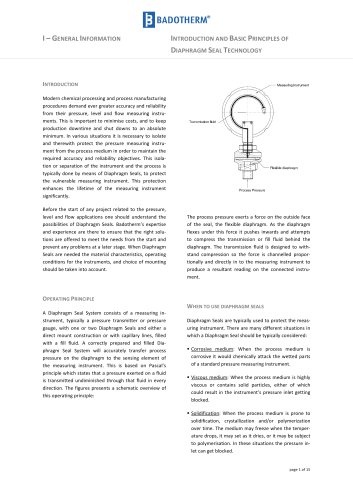
Operating Principle: Diaphragm seals transmit process pressure to a measuring instrument using a fill fluid, ensuring accurate readings while protecting the instrument.
Usage: Recommended for corrosive, viscous, or solidifying media, high/low temperatures, sanitary applications, specific process connections, and hydrogen permeation scenarios.
Performance Considerations: Influenced by system volume and mounting effects; minimizing fill volume and ensuring proper mounting can enhance performance.
Includes flush flanged, flanged slip-on, threaded, sanitary, and special diaphragm seals, each designed for specific applications and conditions.
Badotherm offers solutions like high-temperature diaphragm seals, low gauge pressure applications, gold coating for hydrogen permeation protection, and diaphragm leak detection systems.
- Diaphragm Characteristics: Size, material, thickness, and convolution pattern affect performance. Larger diameters offer more flexibility.
- Fill Fluid Characteristics: Density, viscosity, thermal expansion, and vapor pressure are crucial. Common fluids include silicone oil and glycerin.
A web-based tool for selecting Diaphragm Seal systems, considering parameters like mounting style, temperature, pressure, and diaphragm type.
Pressure is a force applied on a surface, expressed in units like PSI, bar, and kPa. Accurate measurement is crucial for process control.
- Absolute Pressure: Zero-referenced against a vacuum.
- Gauge Pressure: Zero-referenced against atmospheric pressure.
- Differential Pressure: The difference between two pressure values.
Diaphragm Seals must withstand various pressures:
- Maximum Working Pressure (MWP): The highest pressure a device can handle.
- Design Pressure: The range of pressures a process can reach.
- Operating Pressure: The pressure range for stable process operation.
Temperature affects the motion of particles in matter and is influenced by pressure. Common units include Kelvin, Celsius, and Fahrenheit.
1. AP Style 1: Instrument equal to the Diaphragm Seal.
2. AP Style 2: Instrument below the Diaphragm Seal.
3. AP Style 3: Instrument above the Diaphragm Seal.
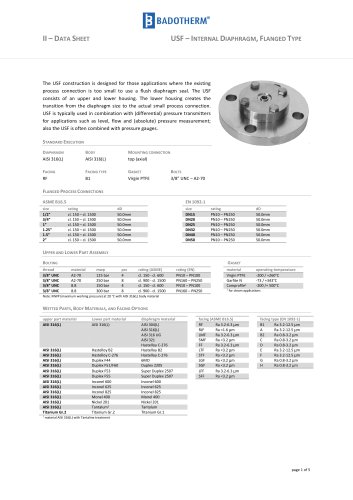
Provides a comprehensive overview of diaphragm seal specifications, focusing on flanged diaphragm seals.
- Process Connection Sizes: Ranging from ½ʺ to 6ʺ, compatible with various standards.
- Process Connection Ratings: Ratings range from cl. 150 to cl. 2500 for ASME and PN10 to PN400 for EN standards.
- Flange Facings: Options include Raised Face (RF), Ring Joint Face (RJF), and others.
- Diaphragm Materials: Includes AISI 316(L), Monel 400, Hastelloy C-276, and others.
- Body Materials: Options include AISI 316(L), Monel 400, Hastelloy C-276, and more.
- Coatings: Various coatings are available for enhanced chemical resistance.
- Other Options: Includes temperature reducers, compensators, and heavy-duty capillary tubes.
- BF – Flush Diaphragm, Flanged Type: Uses a blind flange seal body, typically paired with pressure transmitters.
- Dimensions and Drawings: Detailed dimensions are provided for various standards.
- Wetted Parts and Facing Options: Lists materials and facing types with specific roughness measurements.
- Coating and Other Options: Includes various coatings and additional features.
Provides detailed specifications for various flanged diaphragm types, including size ratings, facing types, and dimensions.
Materials for diaphragms and body parts include AISI 316(L), AISI 304(L), Hastelloy C-276, Monel 400, and others.
Coating options include gold for hydrogen permeation protection, PTFE/ECTFE for anti-stick purposes, and Tantaline treatment.
Includes data sheets for extended diaphragm types and flush diaphragm types.
Used in combination with pressure transmitters and gauges for applications such as level, flow, and pressure measurement.
- Features include PTFE sleeve/lining and customized dimensions.
- Designed for applications with small threaded process connections.
- Similar to UST but designed for even lower pressure ranges.
- Welded construction for aggressive media.
- Designed for viscous processes.
- Designed for food, beverage, and pharmaceutical industries.
- Materials: AISI 316(L), Hastelloy C-276, Monel 400, and others.
- Coatings: Gold, PTFE, ECTFE, and others.
- Thread Standards: NPT, BSP, BSPT, UNF, METRIC.
- Pressure Ratings: Vary by type and size.
- BSO-02: High-temperature silicone fluid.
- BSO-03: Low-temperature inert fluid.
- BSO-18: Silicone fluid for high vacuum and temperature applications.
- BSO-40: FDA-approved for food and pharmaceutical applications.
- BSO-45: Lubricant for cooling and heating processes.
Operating temperature ranges from -20°C to +410°C, with a design temperature of +420°C.
Includes a graph showing the minimum static pressure in mbar as a function of process temperature in °C.
- Flush Flange: Used for flushing solutions with diaphragm seals.
- Flushing Connections: Available in 1/4" and 1/2" NPT and BSP thread norms.
- Body Materials and Facing Options: Various materials including AISI 316(L), Hastelloy C-276, and others.
- Options: Vent & blind plugs, BDTV 910 valves, and welded handles.
Detailed dimensions for standard executions of flush flanges and rings.
Used to mount larger diaphragm seals to smaller process connections.
Available for 2” and 3” diaphragm seals and flush flanges.
Designed to protect capillary connections from mechanical damage.
Protects instruments from high process temperatures.
Discusses various solutions and technologies developed by Badotherm to enhance the performance of Diaphragm Seals.
Designed to withstand process temperatures up to 600°C.
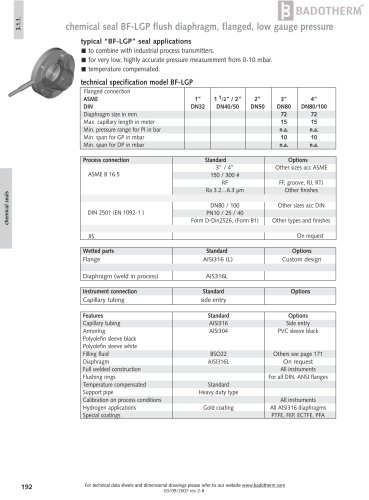
Developed for processes operating at very low pressures.
Used to protect Diaphragm Seals from hydrogen permeation.
Addresses the challenge of measuring low pressures at high temperatures.
Provides early detection of diaphragm leaks.
Protects the capillary connection in harsh environments.
Discusses the raised face covered Diaphragm Seal, designed for flanged seals with exotic wetted parts.
Describes a double weld technology ensuring diaphragm material properties remain unaffected.
Lists various exotic diaphragm materials that can be used with 316 body material.
Provides detailed dimensions for flanges with different ratings.
Similar detailed dimensions are provided for flanges with pressure ratings.
Includes pressure-temperature ratings for various materials.
- Temperature Range: 350°C to 675°C.
- Pressure Values: Maximum allowable pressure at specific temperatures.
- Trend Analysis: As temperature increases, maximum allowable pressure generally decreases.
- Safety Compliance: Adhering to these pressure limits is critical for safety.
- Application Relevance: Relevant for industries dealing with high-temperature processes.
Catalog excerpts

Diaphragm Seals & Solutions
Open the catalog to page 1
DIAPHRAGM SEALS & SOLUTIONS CATALOGUE
Open the catalog to page 2
Holland – UK – Romania – India – Thailand – Dubai – USA To our knowledge, the information contained herein is accurate as of the date of this document. However neither Badotherm, nor its affiliates makes any warranty, express or limited, or accepts any liability in connection with this information or its use. This information is for technical skilled persons at their own discretion and risk and does not relate to the use of this product in combination with any other product. The user alone finally determines suitability of any information or material in contemplated use, the manner of use and...
Open the catalog to page 3
WHO WE ARE Galileo Galilei once said ‘measure what is measurable and make measurable what is not so.’ Four hundred years later, this is exactly what we do. We’re a family-owned company specialised in high quality mechanical process instrumentation. Founded back in 1957 as a production- and repair shop for thermometers, today we are a leading manufacturer of diaphragm seals, pressure gauges, temperature gauges, thermowells, valves and manifolds. We have offices and facilities in Europe, the Middle East, India, the Far East, and Americas. A PASSION FOR EXCELLENCE Our mission is to create the best...
Open the catalog to page 4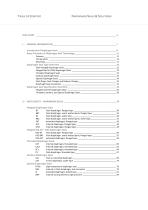
DIAPHRAGM SEALS & SOLUTIONS I – GENERAL INFORMATION ____________________________________________________ 7 Introduction Diaphragm Seals _______________________________________________ 8 Basic Principles of Diaphragm Seal Technology __________________________________ 11 Pressure _________________________________________________________________ 11 Temperature _____________________________________________________________ 14 Mounting ________________________________________________________________ 17 Diaphragm Seal Type Overview ______________________________________________ 22 Flush Flanged Diaphragm...
Open the catalog to page 5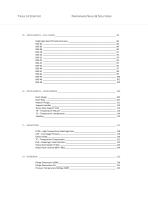
DIAPHRAGM SEALS & SOLUTIONS IV – DATA SHEETS – ACCESSORIES ________________________________________________ 103 Flush Flange ______________________________________________________________ 104 Flush Ring _______________________________________________________________ 107 Reducer Flange ____________________________________________________________ 111 Support Handles __________________________________________________________ 113 Heavy Duty Support Tube ___________________________________________________ 113 TR – Temperature Reducer __________________________________________________ 114 TC – Temperature...
Open the catalog to page 6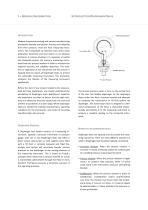
INTRODUCTION DIAPHRAGM SEALS INTRODUCTION Modern chemical processing and process manufacturing procedures demand ever greater accuracy and reliability from their pressure, level and flow measuring instruments. This is important to minimise costs, and to keep production downtime and shut downs to an absolute minimum. In various situations it is necessary to isolate and therewith protect the pressure measuring instrument from the process medium in order to maintain the required accuracy and reliability objectives. This isolation or separation of the instrument and the process is typically done...
Open the catalog to page 9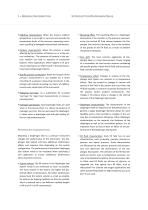
High/low temperatures: When the process medium temperature is very high or very low and exceeds the temperature limits of the pressure measuring instrument resulting in damaged measurement instruments. Sanitary requirements: When the process is easily affected by the formation of bacteria on or in the process connection. The presence of bacteria in the process medium can lead to rejection of production batches. These applications where hygiene is of paramount importance are often found in the pharmaceutical, food and beverage industry. Specific process connections: When the location of the pressure...
Open the catalog to page 10
BASECAL BaseCal is Badotherm’s web-based Diaphragm Seal performance calculation software. BaseCal simplifies the proper selection of Diaphragm Seal transmitter combinations. Regardless the application (flow, pressure, level, etc), users can select the Diaphragm Seal System for the needs of the application. The software requests you to fill out the application parameters and will then calculate the correct calibration range. BaseCal considers the following application variables: Mounting style Differential, absolute or gauge application Ambient and process temperature Operating and design pressure...
Open the catalog to page 11
INTRODUCTION Diaphragm Seals on instruments are used to measure pressure. Pressure can be described as a force applied on a surface. There are different ways of expressing pressures. It can be expressed in kilogramforce per square centimetre (kgf/cm²), whereby kgf stands for a force and cm² for the surface the pressure is applied on. Same is valid for the commonly used Pounds per Square Inch (PSI). Pressure can also be expressed in various other units and most common are: bar, mbar, kPa and MPa, mmHG = Torr (vacuum measurement), mmH20, inchH2O. The pressure that is present on a daily basis is...
Open the catalog to page 12
either one of the above mentioned nominations of pressure. The static pressure is especially important in case of differential pressure measurement. E.g. pressure at high pressure (HP) side is 100,1 barg; pressure at low pressure (LP) side is 100 barg, then the differential pressure (dP) is 0,1 bar, and the value of the static pressure is 100 bar. HYDROSTATIC PRESSURE: is the pressure exerted by a fluid column due to the force of gravity With hydrostatic pressure measurement it is possible to measure level in vessels, tanks, reactors etc. This is one of the most common applications for Diaphragm...
Open the catalog to page 13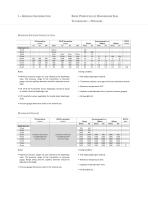
BASIC PRINCIPLES OF DIAPHRAGM SEAL TECHNOLOGY – PRESSURE MINIMUM PRESSURE RANGE OR SPAN DP transmitter (mbar) GP/AP transmitter (mbar) Testing variables: Minimum pressure ranges are only related to the diaphragm sizes. The pressure range of the transmitter or pressure gauge, and the capillary diameter should be adjusted accordingly. AISI 316(L) diaphragm material. Transmitter volume is average of various transmitters brands. Reference temperature 20°C. DP, GP & AP transmitter sensor diaphragm should be equal or smaller than seal diaphragm size. DP transmitter values applicable for double sided...
Open the catalog to page 14All Badotherm Group catalogs and technical brochures
 DLD Diaphragm Leak Detection
2 Pages
 TC Temperature Compensator
2 Pages
 US FH
US FH3 Pages
 BRC
BRC3 Pages
 EXT
EXT3 Pages
 BC
BC4 Pages
 Thermowells
14 Pages











Archived catalogs
 commercial catalogue 2006/07
324 Pages
- Analog pressure gauge
- Industrial thermometer
- Stainless steel pressure gauge
- Dial pressure gauge
- Threaded pressure gauge
- Process pressure gauge
- Waterproof pressure gauge
- Bourdon tube pressure gauge
- Analog thermometer
- Liquid pressure gauge
- Differential pressure gauge
- Dial thermometer
- IP65 pressure gauge
- Bi-metal thermometer
- Diaphragm pressure gauge
- Insertion thermometer
- Pressure gauge diaphragm seal
- Explosion-proof pressure gauge