


Meeting the challenge of private patient rooms with mobile alert messaging
Meeting the challenge of private patient rooms with mobile alert messaging
This document discusses the shift from multi-patient to private patient rooms in hospitals, driven by the need for better infection control, reduced medical errors, enhanced patient privacy, and less patient stress. It also explores how mobile communication technology is being used to maintain caregiver-patient connectivity in this new environment.
Reasons for the Shift to Private Patient Rooms
- Infection Control: Private rooms help reduce the risk of infection transmission among patients, making it easier to quarantine and clean rooms when necessary.
- Medical Errors: The risk of administering medication or performing procedures on the wrong patient is reduced in private rooms.
- Patient Privacy: Private rooms ensure confidentiality during sensitive health discussions, reducing stress and improving communication.
- Patient Stress: Private rooms reduce stress factors such as noise and crowding, which can impair healing and increase anxiety.
Challenges and Solutions
With patients in private rooms, maintaining caregiver-patient connectivity is crucial. Mobile communication software and technology are used to integrate clinical systems, allowing caregivers to receive mobile alert notifications and communicate with patients remotely. This integration helps caregivers respond promptly to patient needs, enhancing clinical efficiency and patient care.
Conclusion
Mobile communication solutions are essential in modern healthcare, improving clinical workflow and patient care by integrating mobile access to health records with bedside clinical systems.
Catalog excerpts
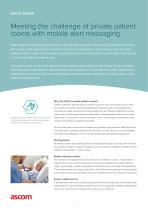
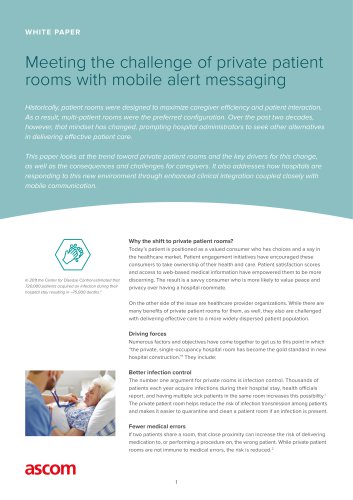
WHITE PAPER Meeting the challenge of private patient rooms with mobile alert messaging Historically, patient rooms were designed to maximize caregiver efficiency and patient interaction. As a result, multi-patient rooms were the preferred configuration. Over the past two decades, however, that mindset has changed, prompting hospital administrators to seek other alternatives in delivering effective patient care. This paper looks at the trend toward private patient rooms and the key drivers for this change, as well as the consequences and challenges for caregivers. It also addresses how hospitals are responding to this new environment through enhanced clinical integration coupled closely with mobile communication. Why the shift to private patient rooms? In 2011 the Center for Disease Control estimated that 720,000 patients a cquired an infection during their hospital stay resulting in ~75,000 deaths.2 Today’s patient is positioned as a valued consumer who has choices and a say in the healthcare market. Patient engagement initiatives have encouraged these consumers to take ownership of their health and care. Patient satisfaction scores and access to web-based medical information have empowered them to be more discerning. The result is a savvy consumer who is more likely to value peace and privacy over having a hospital roommate. On the other side of the issue are healthcare provider organizations. While there are many benefits of private patient rooms for them, as well, they also are challenged with delivering effective care to a more widely dispersed patient population. Driving forces Numerous factors and objectives have come together to get us to this point in which “the private, single-occupancy hospital room has become the gold standard in new hospital construction.”1 They include: Better infection control The number one argument for private rooms is infection control. Thousands of patients each year acquire infections during their hospital stay, health officials report, and having multiple sick patients in the same room increases this possibility.1 The private patient room helps reduce the risk of infection transmission among patients and makes it easier to quarantine and clean a patient room if an infection is present. Fewer medical errors If two patients share a room, that close proximity can increase the risk of delivering medication to, or performing a procedure on, the wrong patient. While private patient rooms are not immune to medical errors, the risk is reduced.
Open the catalog to page 1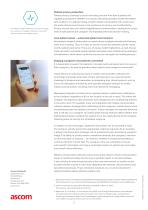
Patient privacy protection A waveform image, attached to an alert message, can enhance a caregiver’s decision of how and when to respond to a patient event. Patient privacy continues to be an overriding concern from both a patient and regulatory perspective. Whether it’s a doctor discussing sensitive health information with a patient, or a patient having a health-related conversation with a loved one, the multi-patient environment is not conducive to privacy and confidentiality. Privacy worries also can inhibit straightforward communication, adding to the stress level of both patient and caregiver...
Open the catalog to page 2All ASCOM catalogs and technical brochures
 Digistat® for wearables
4 Pages
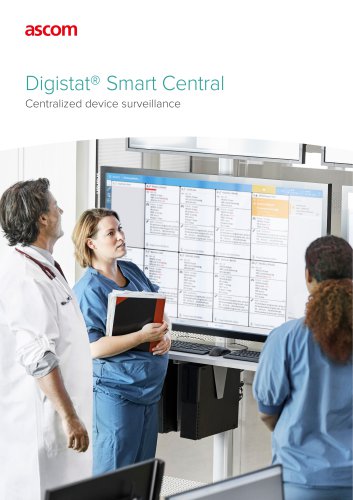 Digistat® Smart Central
6 Pages
 Ascom Ofelia
4 Pages
- Industrial telephone
- Remote monitoring module
- Wireless monitoring module
- Online monitoring module
- Alarm monitoring module
- Software suite
- Industrial smartphone
- Smart monitoring module
- Android industrial smartphone
- WiFi industrial smartphone
- 4G LTE industrial smartphone
- Operating system industrial smartphone
- Networked monitoring system
- Monitoring system with data logging
- IoT monitoring system
- IP68 industrial smartphone
- Internet monitoring system
- Rugged industrial smartphone
- IP monitoring module
- Industrial industrial smartphone