- Catalogs
- Ametek Calibration
- RTC Temperature Calibrator User Manual

- Products
- Catalogs
- News & Trends
- Exhibitions
RTC Temperature Calibrator User Manual
RTC Temperature Calibrator User Manual
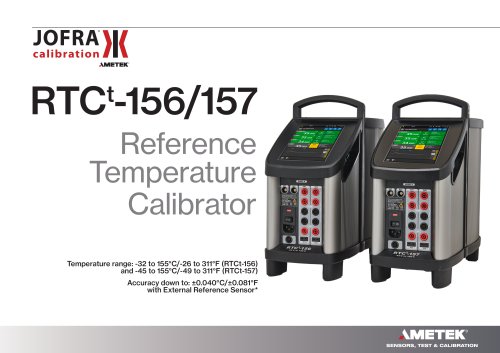
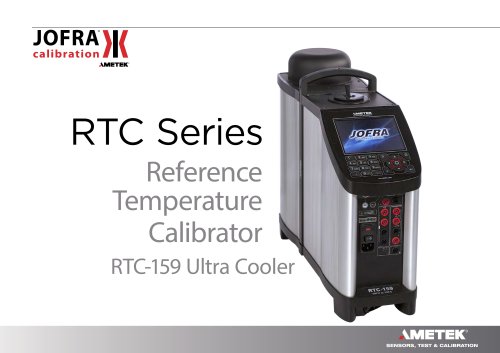
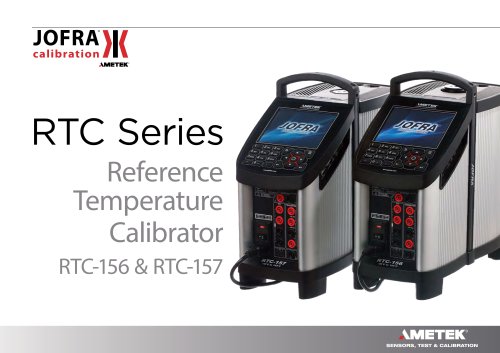
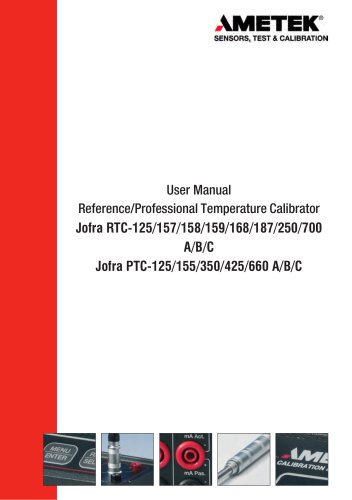
The document provides a comprehensive user manual for the JOFRA RTC and PTC series temperature calibrators, detailing models RTC-156 to RTC-700 and PTC-125 to PTC-660. It highlights the importance of safety and operational guidelines for these instruments, which are designed for calibrating temperature sensors and thermostats.
Users must adhere to safety instructions to prevent injury or damage. Key points include indoor use only, connection to a protective earth, and avoiding operation in hazardous or wet locations. The calibrator should not be used above 2000 meters altitude and must be kept clear of obstructions.
Ensure all equipment is received, including the calibrator, mains cable, USB memory stick, and certificates. Specific setup instructions are provided for dry-block and liquid bath calibrators, with additional components required for liquid baths.
Operation involves navigating menus to set parameters and start the calibrator. Users can perform calibrations, view results, and manage work orders. The setup menu allows for setting temperature parameters, resolution, sound, and recalibration intervals.
Proper storage and transportation are crucial, with specific instructions for dry-block and liquid bath calibrators, including emptying the well for liquid baths.
Do not use the RTC-158/168 insulation plug with the RTC-250 due to melting risks. Ensure the calibrator is connected to a separate power circuit from essential safety equipment to prevent electrical failures.
Calibrators must operate at specific temperatures to meet EN61010-1 safety requirements. For humid conditions, a minimum of 140°C for 2 hours is required. Wet calibrators should be dried before use.
Avoid using heat transfer fluids in dry-block calibrators. The calibrator should be switched off before servicing, and protective gear should be worn during cleaning. High-temperature calibrations require a protection shield.
Calibrators should not be stored above 50°C or operated above 40°C. Proper protective equipment is necessary during transportation.
Sockets on input modules should not exceed 30V. Thermostats must not be connected to other voltage sources during tests.
Ensure sensors are clean and dry to prevent steam explosions. Proper ventilation is required, and the maximum set temperature should be adjusted according to fluid specifications.
Avoid touching hot surfaces to prevent burns. For cold surfaces, ensure the well and insertion tube are dry to prevent frost damage.
The calibrator is for indoor use only and requires a protective earth connection. It should be positioned for easy power disconnection.
Ensure sensor coefficients match the calibration certificate using JOFRACAL software. Follow specific setup instructions for dry-block calibrators.
The DLC system maintains temperature at 0.00°C when active. Various sensor values, including TRUE and SET readings, are always visible.
Outlines standard communication connections for RTC and PTC models, including SD-card slots, Ethernet, USB ports, and sync relay outputs.
Warnings against connecting input terminals to voltages exceeding 30V. Describes sockets for external connections.
Stability messages indicate whether the measured temperature is stable, not stable, or approaching stability.
Operated using horizontal and vertical menu lists, with specific keys for RTC and PTC models.
Available for B versions, allowing automatic calibrations using workorders created with the JOFRACAL PC program.
Designed for B versions, automatically identifies switch temperatures of a thermostat. Requires parameters: Start temperature, End temperature, and Rate of change in temperature.
Automates calibration across a range of temperatures. Parameters include Number of steps, Mode, Hold time, and T step values.
Set additional stability time and configure TRUE reference sensor settings for B and C versions.
Set temperature parameters and use an access code for certain features.
- The slope rate should allow the thermostat sensor to follow the calibrator's temperature.
- Hysteresis measurement requires setting hysteresis to "Yes".
- Stability criteria can be set for both reference and test sensors.
- Access codes protect certain settings and can be disabled by entering 0000.
Catalog excerpts
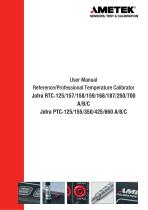
SENSORS, TEST & CALIBRATION User Manual Reference/Professional Temperature Calibrator Jofra RTC-125/157/158/159/168/187/250/700
Open the catalog to page 1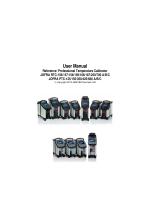
User Manual Reference/ Professional Temperature Calibrator JOFRA RTC-156/157/158/159/168/187/250/700 A/B/C JOFRA PTC-125/155/350/425/660 A/B/C Copyright 2012 AMETEK Denmark A/S
Open the catalog to page 2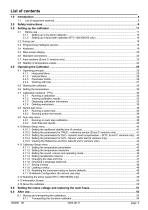
4.10.3 Setting the parameters for DLC- dynamic load compensation - (RTC, B and C versions only) .. 42
Open the catalog to page 3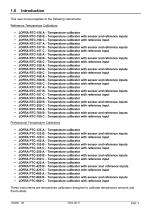
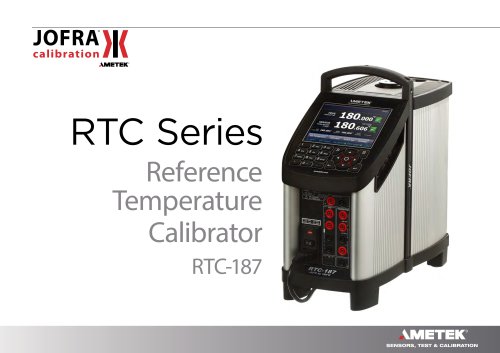
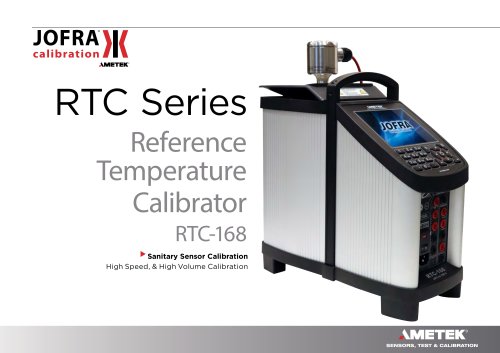
This user manual applies to the following instruments: Reference Temperature Calibrators calibrator calibrator with calibrator with calibrator calibrator with calibrator with calibrator calibrator with calibrator with calibrator calibrator with calibrator with calibrator calibrator with calibrator with calibrator calibrator with calibrator with calibrator calibrator with calibrator with calibrator calibrator with calibrator with sensor and reference inputs reference input sensor and reference inputs reference input sensor and reference inputs reference input sensor and reference inputs reference...
Open the catalog to page 5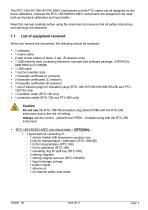
The RTC-156/157/159/187/700 A/B/C instruments and the PTC-series are all designed as dry-block calibrators, whereas the RTC-158/168/250 A/B/C instruments are designed to be used both as dry-block calibrators and liquid baths. Read this manual carefully before using the instrument and ensure that all safety instructions and warnings are observed. When you receive the instrument, the following should be enclosed: • 2 sets of test cables (2 black, 2 red -B versions only) • 1 USB memory stick containing electronic manuals and software package: JOFRACAL, AMETRIM and CON050 • 1 tool for insertion tube...
Open the catalog to page 6
Read this manual carefully before using the instrument! In order to avoid any personal injuries and/or damage to the instrument all safety instructions and warnings must be observed. The screen menus shown in this manual represent the menus displayed when using a B-version. /v-®\ These calibrators contain Electrical and Electronic circuits and must be recycled or disposed of properly (in accordance with the WEEE Directive 2012/19/EU). • Always supply the calibrator using a power circuit which is separate from essential safety equipment and vital hospital equipment etc., to prevent fatal consequential...
Open the catalog to page 7
• Never use heat transfer fluids such as silicone, oil, paste, etc. in the dry-block calibrators. These fluids may penetrate the calibrator and cause electrical hazard, damage or create poisonous fumes. • The calibrator must be switched off before any attempt to service the instrument is made. There are no user serviceable parts inside the calibrator. • When cleaning the well or the insertion tube, REMEMBER to wear goggles when using compressed air in the dry-block calibrator and cleaning oil in the liquid bath calibrator. • Use protection shield when calibrating at high temperatures (RTC-700...
Open the catalog to page 8
• Heat transfer fluids must only be used in calibrators prepared as a liquid bath. If these fluids are heated above specified temperature they will create noxious or toxic fumes. Proper ventilation must be used. • To avoid hazards from treating fluids in a wrong manner, always reduce the "Max. SET-temperature allowed” in the CALIBRATOR SETUP MENU according to the specifications of the fluid to be used. If using a calibrator outside of the fluids specifications there is a risk of fire hazards, personal Injury or chemical release. By reducing the "Max. SET-temperature allowed”, the calibrator cannot...
Open the catalog to page 9
To prevent this from happening, the insertion tube and the well must be dried. This is done by heating up the calibrator to min. 100°C/212°F until all water left has evaporated. Remove the insulation plug while heating up. It is very important that humidity in the well and insertion tube is removed to prevent corrosion and frost expansion damages. • Do not use the instrument if the internal fan is out of order. • Before cleaning the calibrator, you must switch it off, allow it to cool down and remove all cables. • Always place power cable and cables to attached accessories, such as sensors, in...
Open the catalog to page 10
• Scratches and other damage to the insertion tubes should be avoided by storing the insertion tubes carefully when not in use. • The insertion tube must never be forced into the well. The well could be damaged as a result, and the insertion tube may get stuck. • Before using new insertion tubes for the calibration, the insertion tubes must be heated up to maximum temperature - 250°C (482°F) / 700°C (1292°F) (RTC-250/700 A/B/C only) and 350°C (662°F) / 425°C (797°F) / 660°C (1220°F) (PTC-350/660 A/B/C only) - for a period of minimum 30 minutes. • The insertion tube must always be removed from...
Open the catalog to page 11
The RTC/PTC-B-versions have a precision reference input. To achieve the high precision, a set of sensor coefficients relating to the specific sensor must be present in the RTC/PTC. Before use of the RTC/PTC, ensure that the correct coefficients in the RTC/PTC are equal to those from the sensors calibration certificate. This is done with the included PC software JOFRACAL. Please read how to do in the chapter "Reference Sensors” in the JOFRACAL user manual. • The calibrator must not be used for any purposes other than those described in this manual, as it might cause a hazard. • The calibrator...
Open the catalog to page 12
About the liquid bath (RTC-158/168/250 A/B/C only): • For liquid bath ensure that the sensor is absolutely clean and dry as a few drops of water in the well (liquid baths) might cause a steam explosion. • Do not pour cold fluid into a hot well - it might cause an explosion. • AMETEK Denmark A/S does not take any responsibility, if the well is filled with other fluids than those recommended. • Liquid baths should only be operated by trained personal. • Heat transfer fluids must only be used in calibrators prepared as a liquid bath. If these fluids are heated above specified temperature they will...
Open the catalog to page 13All Ametek Calibration catalogs and technical brochures
 Type T Deadweight Tester
8 Pages
 ATMi Temperature Module
7 Pages
 XP2i Data Recorder
6 Pages
 Temperature Pressure Process
12 Pages
 AMETEK Calibration Brochure
12 Pages
 Maritime Brochure
8 Pages
 CPF Brochure (D)
4 Pages
 APM Advanced Pressure Module
6 Pages
 Product Overview Brochure
8 Pages
 GaugeCalHP Manual
20 Pages
 24 VDC Power Supply Manual
7 Pages
 24 VDC Power Supply
4 Pages
 FastCalXP
9 Pages