
- Catalogs
- AMANDUS KAHL
- Pelleting Plant for Domestic Waste


Pelleting Plant for Domestic Waste
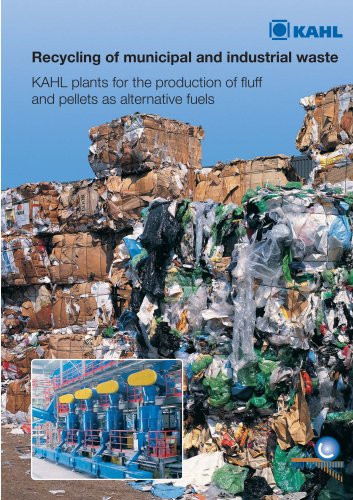
Pelleting Plant for Domestic Waste
KAHL plants are utilized for converting municipal and industrial waste into alternative fuels in the form of fluff and pellets. This process is part of the broader effort to manage waste sustainably and reduce reliance on fossil fuels.
Background
Following the implementation of TASI in Germany, the disposal of untreated waste was prohibited, leading to the development of recovery plants that separate recoverable materials from waste. Producing defined fuels from waste materials is both ecologically and economically beneficial.
Alternative Fuels Production
Alternative fuels are produced from municipal waste, commercial refuse, and mixed plastics. These fuels have a caloric value of approximately 17,500 KJ/kg and are used in various industries, including steel, power stations, methanol production, and cement.
Process Overview
The production process involves several stages: intake, conditioning, size reduction, sifting, screening, and separation of non-combustible materials. The waste is processed into fluff or pellets, depending on the requirements.
Plant Types
KAHL plants are categorized into three types: Fluff plants, Pelleting plants, and combined Fluff and Pelleting plants. Each plant type includes stages such as supply, proportioning, production, drying, mixing, cooling, and discharge.
Applications and Benefits
KAHL machines are versatile, processing various waste types, including municipal waste, mixed plastics, and by-products from mechanical waste treatment. The resulting fluff and pellets serve as alternative fuels, reducing the need for oil and coal dust.
Additional Services
KAHL offers consultation, engineering, installation, and after-sales service. Their plants also have applications in recycling industries for processing waste tyres, wood, sewage sludge, and agricultural biomass.
Catalog excerpts
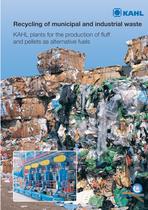
KAHL plants for the production of fluff and pellets as alternative fuels >
Open the catalog to page 1
Kahl machines are used for the com-paction of by-products from plants for mechanical/biological waste treatment andin mechanical waste treatment plantsthemselves. The conditioned residual waste is sold in the form of pellets or fluff. ■ Fluff is mainly used as alternative fuel to oil or coal dust in the cement industry and in power stations. Further application possibilities of KAHL plants for recycling industries ■ Grinding and separation of the components from waste tyres (granulate) ■ The biggest buyers of pellets are the operators of gasification plants and power stations. Our services: ■...
Open the catalog to page 4All AMANDUS KAHL catalogs and technical brochures
 PELLET MILLS
9 Pages
Archived catalogs
 AK01 KAHL ROTOSPRAY®
2 Pages
 Wood Pelleting Plants
12 Pages
 KAHL High-Speed Mixer SMW
2 Pages
 KAHL Annular gap expander
4 Pages
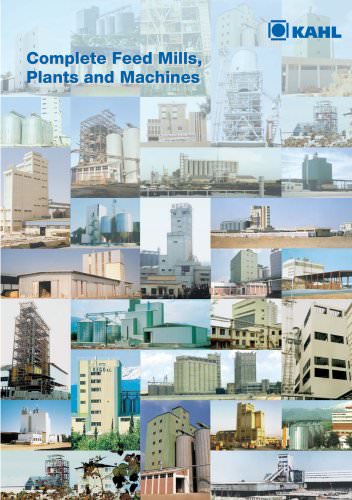 Feedmills, Plants, and Machines
12 Pages
 KAHL Fabric Belt Drier
4 Pages
 Annular Gap Expander
4 Pages
 Pelleting Presses
8 Pages
 Belt driers and coolers
8 Pages
 Crown Expander OEK
2 Pages
 KAHL Batch Mixers
2 Pages
 KAHL Continuous Mixer
2 Pages
 KAHL Press O-500/390
2 Pages
 KAHL AKANA Hammer Mills
2 Pages
 Waste Tyre Recycling Plants
6 Pages









- Rail conveyor
- Dynamic agitator
- Transport rail conveyor
- Chiller
- Grinding mill
- Horizontal conveyor
- Amandus Kahl dryer
- Agitator for the food industry
- Vertical homogenizer
- Liquids dispensing system
- Stainless steel homogenizer
- Air chiller
- In-line mixer
- Inclined conveyor
- Work conveyor
- Solid/liquid agitator
- Horizontal lump breaker
- Industrial cooling system
- Continuous drying system
- Vertical pulverizer