
- Catalogs
- ACI Industriearmaturen GmbH
- Screwed sight glass fitting type 327


- Company
- Products
- Catalogs
- News & Trends
- Exhibitions
Screwed sight glass fitting type 327
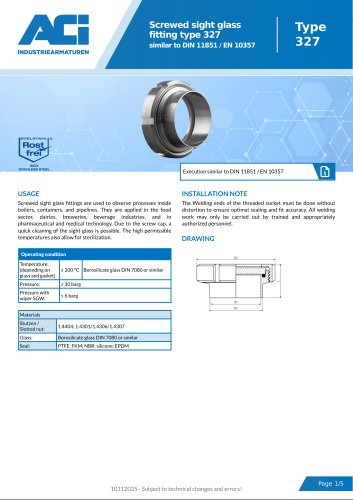
Screwed sight glass fitting type 327
Catalog excerpts
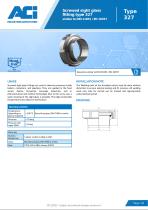
Screwed sight glass fitting type 327similar to DIN 11851 / EN 10357 USAGE Screwed sight glass fittings are used to observe processes inside boilers, containers, and pipelines. They are applied in the food sector, dairies, breweries, beverage industries, and in pharmaceutical and medical technology. Due to the screw cap, a quick cleaning of the sight glass is possible. The high permissible temperatures also allow for sterilization. The Welding ends of the threaded socket must be done without distortion to ensure optimal sealing and fit accuracy. All welding work may only be carried out by trained and appropriately authorized personnel. 10112025 - Subject to technical changes and errors!
Open the catalog to page 1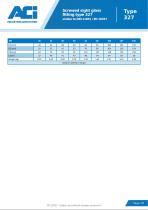
Screwed sight glass fitting type 327similar to DIN 11851 / EN 10357 DN 10112025 - Subject to technical changes and errors! qe
Open the catalog to page 2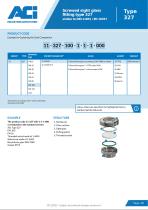
r Screwed sight glass PRODUCTCODE Example for Explaining the Code Composition GASKET VARIANT 1) Borosilicate glass according to DIN 7080 or similar 3) Borosilicate glass2 + PTFE wiper SGW 5) Borosilicate glass2 + silicone wiper SGW 1) Nutmutter according to offer / order confirmation EXAMPLE STRUCTURE The product code 11-327-100-1-1-1-000 corresponds to the standard version: Threaded socket made of 1.4404 Slotted nut Glass cushion Sight glass D-Ring gasket Threaded socket Slotted nut made of 1.4404 Borosilicate glass DIN 7080 Gasket PTFE 10112025 - Subject to technical changes and errors!
Open the catalog to page 3
Screwed sight glass fitting type 327 QUICK OVERVIEW Custom designs available Accessories available OPERATING CONDITIONS Operating conditions depend on the choice of glass and seals: Borosilicate glass DIN 7080 or similar PRESSURE SIGHT GLASS
Open the catalog to page 4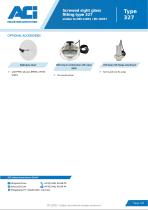
Screwed sight glass fitting type 327similar to DIN 11851 / EN 10357 Type OPTIONAL ACCESSORIES Sight glass wiper 9 Konigskamp 19 • 52428 Julich • Germany 10112025 - Subject to technical changes and errors!
Open the catalog to page 5All ACI Industriearmaturen GmbH catalogs and technical brochures
 Company brochure
15 Pages
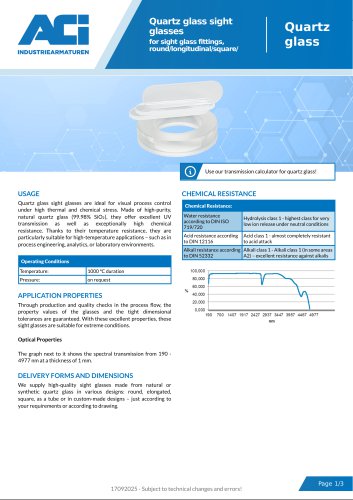 Quartz glass sight glasses
3 Pages
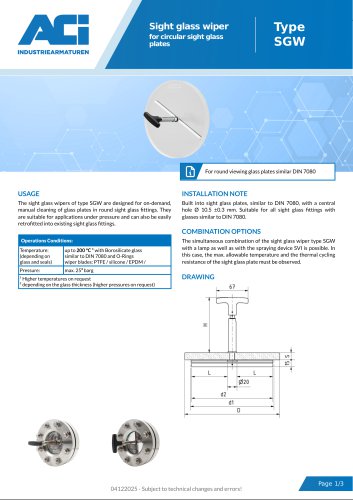 Sight glass wiper
3 Pages
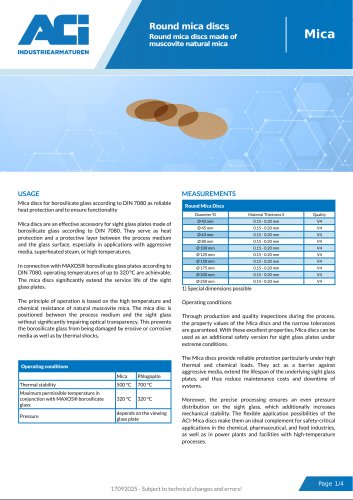 Round mica discs
4 Pages

- Liquids level gauge
- Sight glass level indicator
- Storage tank level indicator
- Sight glass for industrial applications
- Stainless steel sight glass
- Flange sight glass
- Borosilicate glass sight glass
- Threaded level gauge
- Monitoring sight glass
- Flange level gauge
- Vessel sight glass
- Glass level gauge
- Weld-on sight glass
- Threaded sight glass
- Chemical sight glass
- Level indicator sight glass
- Sanitary sight glass
- Sight glass for the pharmaceutical industry
- ATEX sight glass