
- Catalogs
- Marsh Bellofram
- Marsh Bellofram PCD Division Type 2000 I/P & E/P Transducers

Marsh Bellofram PCD Division Type 2000 I/P & E/P Transducers
1 /5Pages

Marsh Bellofram PCD Division Type 2000 I/P & E/P Transducers
1 /5Pages
Catalog excerpts

72 800.727.5646 • www.marshbellofram.com Transducers Description The Marsh Bellofram Type 2000 is a robust electronic instrument that regulates an incoming supply pressure down to a precise output pressure which is directly proportional to an electrical control signal. The secret to the Type 2000’s precise, reliable performance under a variety of demanding environmental conditions is a patented piezo-ceramic actuator with many industry-wide firsts. The Type 2000 has been designed to meet the electro-pneumatic needs of the world: • Field-selectable inputs and direct/reverse/ split ranging • Multiple input/output/mounting configurations • Precise, reliable performance under extreme conditions of temperature, vibration, orientation, supply pressure changes, supply voltage changes, RFI/EMI, humid / oil-laden media, and corrosive surroundings Applications The Type 2000’s precisely regulated pneumatic output can be used to operate: • Valve Actuators • Louver and Damper Actuators • Valve Positioners • Relays • Clutches and Brakes • Controllers • Air Cylinders Industry Applications Include • Chemical and Petrochemical Industries • Petroleum Production • Pipeline Transmission • Electric Utilities • Water and Wastewater Systems • Pulp and Paper • Textiles • Semiconductor Industry • Food and Beverage • Environmental Control Systems • Construction Equipment • Agricultural Equipment • Machine Tool • Material Handling • Automotive Testing and Assembly • Medical Equipment Type 2000 I/P & E/P Transducers Principle of Operation The Type 2000 I/P and E/P transducers utilize closed-loop pressure feedback-control for precision pressure output and minimized effects of temperature, supply pressure changes, supply voltage changes, and mounting angle. Supply pressure is reduced by the supply valve to provide an output pressure which is internally routed to a precision temperature compensated piezo-resistive pressure sensor. Supply pressure is also routed to an externally removable orifice which provides a reduced pilot pressure to a chamber containing a servo diaphragm and nozzle. Pilot pressure is controlled by modulating the gap between the face of a nozzle and an adjacent piezo-ceramic actuator, which is part of a unique patented mechanism. The piezo-ceramic actuator serves as a control link between electrical input and pressure output as follows: • The input current (I/P) or voltage (E/P) signal is conditioned to provide a normalized control signal directly proportional to the desired pressure output. • Simultaneously the output of the pressure sensor is amplified and conditioned to produce a feedback signal. • The sum of the control signal and the feedback signal produce a command signal which is delivered as a DC voltage to the piezoceramic actuator. • As voltage increases, the force applied by the actuator increases, so as to restrict nozzle bleed and thus increase pilot pressure. • Increased pilot pressure applied to the servo diaphragm directly causes opening of the supply valve and an increase in the output pressure until the output feedback signal and control signal combine to produce the correct command signal. Fine-Tuning Your Application For optimal performance in your application, the calibration of the Type 2000 can be fine-tuned in the field. An easily-removable cover provides access to the isolated electronics. All potentiometers, connections, jumpers, and switches are clearly marked on the circuit board or on the handy chart located on the inside of the cover. The three elements of calibration (Gain, Zero, and Span) are described below. Consult the Type 2000 User’s Manual for detailed calibration procedures, cautions, and instrumentation requirements. Type 2000 Transducers Gain (Damping) Adjustment The output response of the Type 2000 can be optimized for varying downstream volumes by adjusting the system gain of the control circuit. Adjust the Gain Pot counterclockwise for increased gain; clockwise for increased oscillation damping. For maximum allowable gain in your application, the pot should be turned clockwise until oscillation just disappears. Zero and Span Adjustments The Type 2000 contains multi-turn Coarse-Zero, Fine-Zero, and Span adjustment potentiometers which are clockwise positive. Adjustment of either Zero Pot changes the unit’s minimum output while the Span Pot changes the maximum output. The adjustments are interactive, so it may take iterations to reach the desired calibration. Wide Rangeability The Type 2000 can be field calibrated to pressure ranges other than the standard ones by combinations of recalibration, pressure range switching, and split high/low ranging. A unit should not be switched to a range outside its pressure sensor family (eg., a 0-15 PSIG can be switched to a 3-15 PSIG, but not to 0-30 PSIG). (Caution: Do not exceed the range of the onboard pressure sensor.) For example, the easiest way to recalibrate a 0-30 PSIG unit to 3-15 psig would be to change the switch setting to 3-27 PSIG, then switch to split range low. Field-Selectable Features Onboard switches allow the user to easily reconfigure the Type 2000 for any of several electrical inputs, direct/reverse acting, or output split-ranging high/low. Fine tuning of the unit’s calibration may be necessary after a reconfiguration.
Open the catalog to page 1
www.marshbellofram.com • 800.727.5646 73 Transducers Easy Access Top Cover 1) Isolated electronics 2) Calibration adjustments 3) Configuration switches 4) Switch information on inside of cover Mounting Options 1) In-Line 2) Direct: Holes on left rear and bottom faces 3) Bracket Mounting options: Panel, Pipe, Valve, DIN-Rail Integral Booster Flows up to 21 scfm for quick system response Gauge Port 1/8 NPT on all models (Not shown; rear face) Manifold-Mounting Option Supply and Output ports on the bottom face rather than “through the body” Electrical Port Options 1) 1/2 NPT Conduit 2) 20mm Conduit...
Open the catalog to page 2All Marsh Bellofram catalogs and technical brochures
 Full Catalog BelGAS
307 Pages
 5204
52041 Page
 P627 High Flow Gas Regulator
10 Pages
 P212 Pressure Regulator
16 Pages
 P200 Pressure Regulator
19 Pages
 P95H Regulator
15 Pages
 P99 Pressure Reducing Regulator
11 Pages
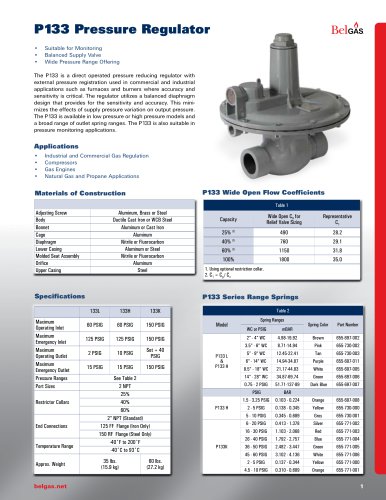 P133 Pressure Regulator
12 Pages
 P140 Pressure Regulator
4 Pages
 P303 Pressure Regulator
11 Pages
 P300 Pressure Regulator
11 Pages
 P203 Pressure Reducing Regulator
18 Pages
 F300 Pressure Regulator
7 Pages
 P600 Pressure Regulator
7 Pages
 P289RC Exhaust Booster
2 Pages
 W627 Liquid Gas Regulator
8 Pages
 F627 High Flow Gas Regulator
7 Pages
 BELLOFOAM™ 7804
1 Page
 BELLOFOAM™ 7704
1 Page
 BELLOFOAM™ 7604
1 Page
 Marsh Catalog
84 Pages
 P79 Air Relays
4 Pages
 Automated Timing & Controls
142 Pages
 Motor Protection
86 Pages
 Digital Controllers
30 Pages
 P630 High Flow Gas Regulator
12 Pages
 P39 Standard Gas Regulators
4 Pages
 P40 & P40 NACE Regulators
2 Pages
 P912 Pressure Regulator
2 Pages
 P119 Control Valve
4 Pages
 BelGAS Product Overview LT5040
12 Pages
 KING-GAGE Product Catalog
12 Pages
 BelGas P200 Pressure Regulator
18 Pages


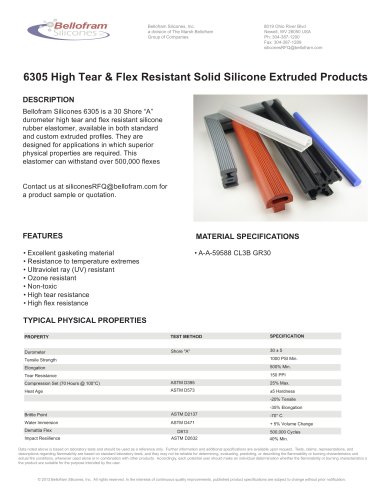


Archived catalogs




- Connector
- Manual valve
- Temperature probe
- Electrical power supply connector
- On/off valve
- Angular encoder
- Incremental encoder
- Pressure gauge
- Pressure limiter
- Gas valve
- Profile
- Double-acting cylinder
- Level probe
- Single-stage pressure regulator
- Rectangular connector
- Liquid level sensor
- Pneumatic cylinder
- Incremental rotary encoder